Nudging Farmers to Lower Nitrogen Pollution

Written by
Yuan Chai, David Pannell and Philip Pardey

Behavioral economists are studying “nudges” to prompt behavior change in agriculture. Accounting for production economics can help make nudges more effective for reducing agricultural run-off.

A banner showing water runoff from a corn field
Runoff of nutrients from farm fields.
Photo Credit: Lynn Betts

Water pollution caused by agricultural nitrogen runoff is a pervasive problem worldwide. In a recently published paper (Food Policy), GEMS researchers (Yuan Chai and Philip Pardey) teamed up with University of Western Australia collaborator (David Pannell) to provide a new slant on this age-old problem. Combining insights from both production economics and behavioral science opens up new and practical avenues for nudging farmers towards eco-friendly practices that can mitigate water pollution. 


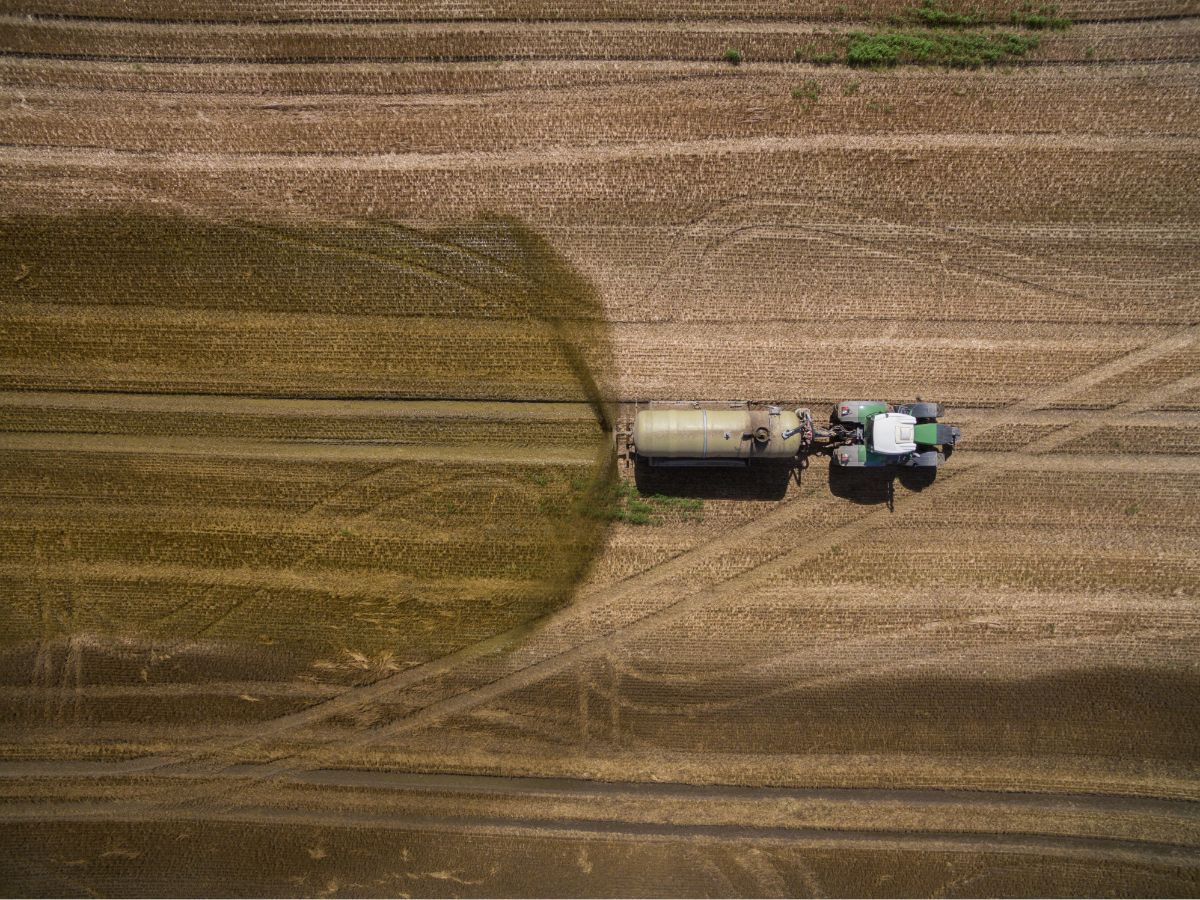
container trailers of liquid nitrogen

Production Economics Insights

The authors highlight three key empirical findings that offer opportunities to reshape farming practices and reduce nitrogen pollution. First, many farmers tend to apply more nitrogen than necessary, driven by yield maximizing or other motives. This can lead farmers to use more fertilizer than is economically optimal, which not only incurs avoidable costs but also exacerbates the water pollution problem. Second, farmers may imagine that, contrary to the evidence, using more fertilizer is a risk-reducing strategy. Thirdly, the profit-to-fertilizer-rate relationship is flat near the optimum, suggesting that farmers can curtail their fertilizer usage without incurring significant, if any, private costs (through foregone income).

Nudges

Leveraging these three insights, the authors draw on emerging findings from behavioral economics to identify a number of potentially transformative approaches to curbing agricultural pollution. The authors make specific suggestions for ways in which behavioral science could contribute in these areas, including understanding farmers’ perceptions about nitrogen, yield and profit (detecting biases), understanding the influences of these biases on behavior, understanding farmers’ perceptions of and preferences for different policy responses, and designing behavioral nudges that capitalize on the specific insights we have highlighted regarding the production economics of nitrogen fertilizer. Nudges could include strategies that aim to correct biases in perceptions (e.g., about yield increases or risk reductions from applying N),or tap into social and psychological factors that influence farmers’ decision making.

Behavioral changes that are deemed nudgeable (i.e., where farmers bear little or no cost) have a lot of merit. The nudges revealed through this research could go a long way to cleaning up water bodies in ways that do not undermine food security or farmer livelihood concerns: a rare win-win result.


​This activity supported in part by MnDRIVE Global Food Ventures, University of Minnesota

Become a Data Scientist for Digital Agri

Services
Written by
Kevin A. T. Silverstein

What skills should you be building for a career as a data scientist in Digital Agriculture?

Everything we do has a spatial and temporal component. These days GIS skills are a big plus!

I often have students come to me saying “I’m passionate about the agri-food sector and I want to do data science. What skills do I need to land a satisfying job, and ultimately a career, in this area?” So I figured I’d take the opportunity to share what I typically say to them here, for the benefit of all those out there with similar goals and interests. Key items are in bold.

First off, there is so much unstructured data out there, in disparate formats and locations that you aren’t going to get far without a programming language under your belt. And in this field, that really boils down to Python and/or R. Sure, Chat-GPT can write code, but trust me, it’s not there yet.

Next, everything we do has a spatial and temporal component. These days GIS skills are a big plus! You don’t have to be a GIS expert, but you should know what a coordinate reference system and datum are, understand the limitations and practicalities of aggregation and disaggregation to different levels of resolution, and be facile with vector and raster manipulations.

Data science applied to any domain involves statistics and modeling. Moving beyond point estimates with p-values and understanding Bayesian statistics will get you far. And an understanding of databases (e.g., relational, graph, or columnar) can also be useful.

Finally, many datasets are incredibly large, so analyses often can’t be performed on your laptop. So familiarity with doing analyses on High-Performance Computing (HPC) infrastructure can be critical. These systems have mechanisms in place for you to schedule jobs to be run across multiple processors in tandem with other people’s jobs, and there are conventions and rules of etiquette for that.

Depending on the positions you have in your wish list, you may want to be sure to have either a Masters level degree or Ph.D. Masters should suffice if you’re happy to have someone else identify and devise the scope of the problems you work on. If you want to do pure R&D and define your own problems, a Ph.D. will likely be necessary.

If you're lacking some of these skills or qualifications, there are numerous data science degrees offered across the country, as well as short instructional modules such as those included in GEMS Learning.


​This activity supported in part by MnDRIVE Global Food Ventures, University of Minnesota
Building a Platform for Agri-Food Informatics

Categories
Written by
Joe Axberg

GEMS at the Intersection of Technology and Agriculture

Hi, I’m Joe Axberg, an Application Engineer at the Minnesota Supercomputing Institute (MSI).  I am part of the Development and Operations team that builds and maintains our GEMS applications and services. It is through that backend “IT” lens that I will be writing my first post on our blog site.  Others on the GEMS team will be blogging about all the great things being done with GEMS - in other words - how GEMS is being used and how it is making a difference.  In this post though, I’d like to talk a little bit about the technology that powers GEMS.

Here at the University of Minnesota, GEMS is a collaboration between the College of Food, Agricultural, and Natural Resource Sciences (CFANS) and Research Computing, including the Minnesota Supercomputer Institute (MSI) and U Spatial.  The MSI is responsible for providing a variety of high performance computing resources to researchers across the University and beyond. The kind of high performance computing power needed to solve the big problems and crunch the big data.

Utilizing high performance computing can be challenging, complex, and intimidating.  In the agri-food research space, adoption of high performance computing has historically not been very high. Agri-food researchers are not computer scientists - but neither should we need them to be.   Applications and tools should exist that lower the barrier to access high performance computing to the agri-food researcher.

Hence the development of the GEMS Informatics and GEMS Learning Platforms.

What is Informatics? 

A quick Google search revealed this definition:

“the science of processing data for storage and retrieval”

“...processing data for storage and retrieval” - that certainly does sum up what the GEMS platform does - in a perhaps over-simplified way.  At GEMS, we expand on that definition: “turning…data into actionable information for farmers, scientists, governments or companies…” (Check it out at our About Page)

These days it is all about the data and the amount of data is immense - especially in the agri-food sector.  Challenges abound in the form of sustainability, changing climate, distribution, and more.  The data is out there and there is a lot of it.

The volume and complexity of this data often means that traditional methods for gathering, cleaning, organizing, storing, and analyzing data run out of steam. 

The aim of the GEMS Informatics platform is to make the job of the agri-food researcher easier.  An application that allows the data to become actionable more quickly.  Present within GEMS are applications and services that can handle the entire lifecycle of agri-food data.

Coupled with the GEMS platform is GEMS Learning.  Provided are a series of training modules and courses for upskilling agri-food researchers in the use of technology.  GEMS Learning is constantly developing and looking at new training opportunities for agric-food researchers in the area of high performance computing.

What Powers GEMS Informatics?

At risk of sounding cliche’, it really is about the people. Please visit the GEMS website to learn more about the passionate group of researchers, professors, technologists, and administrators who make GEMS possible.

On the technical side, the GEMS platform is a thoroughly modern platform developed using some of the latest technologies and techniques.  The various components of the GEMS platform leverage both private and public cloud services. Docker containers form the basic infrastructure of the platform.  Modern web development technologies are used to implement the platform.


​This activity supported in part by MnDRIVE Global Food Ventures, University of Minnesota